Access to clean and safe drinking water is one of the most critical public health challenges in India. This is where Water Vending Machines (Water ATMs) provide a powerful solution — automated systems combining advanced purification technology with convenient public access, offering safe drinking water at minimal cost.
💡 Did You Know?
Bottled water is expensive and contributes significantly to plastic pollution. For daily wage workers, students, travelers, and rural communities, affordable purified water is not always accessible — Water ATMs solve this at scale.
What Are Water Vending Machines (Water ATMs)?
Water Vending Machines, commonly referred to as Water ATMs, are automated dispensing units that purify and distribute drinking water to the public. Users can collect water by inserting coins, using prepaid smart cards, or making digital payments via UPI or QR codes.
Unlike conventional water coolers or tank systems, Water ATMs are integrated with multi-stage purification systems, ensuring high-quality drinking water that meets safety standards. In India, Water ATMs are increasingly being installed under government initiatives, CSR programs, railway modernization projects, and rural development schemes.
Modern Stainless Steel Water ATMs
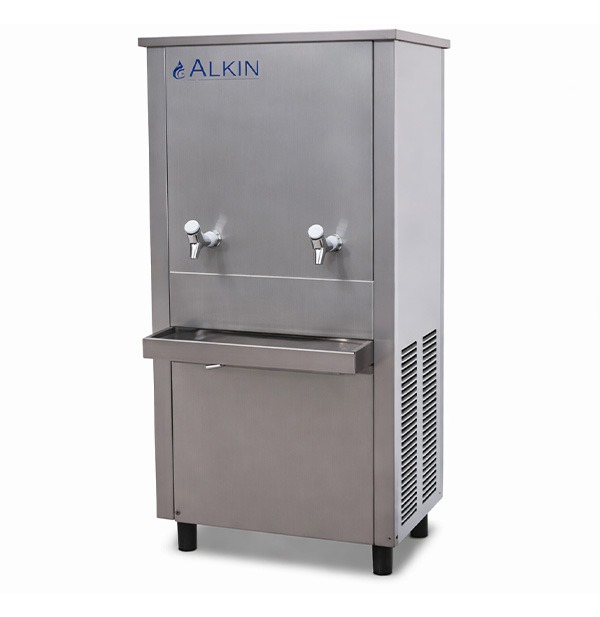
Modern stainless steel water ATM systems are engineered to withstand harsh Indian weather conditions and continuous public usage. The machines are manufactured using superior stainless steel, making them corrosion resistant and highly durable.
- Coin-operated water vending functionality for universal accessibility
- 24/7 fresh drinking water access — no operator required
- Easy installation process with minimal civil work
- Low power consumption — optimized for Indian grid conditions
- Front LED display for user instructions in multiple languages
- Power backup facility for uninterrupted operation during outages
- Competitive pricing for scalable deployment across cities and villages
Key Features of Smart Water ATM Machines
Multi-Stage RO Purification
Sediment filter → Activated carbon → RO membrane → UV disinfection. Every stage removes specific contaminants for complete water safety.
Digital Payment Integration
Coin-operated, RFID smart cards, QR code payments, and UPI integration — flexible for both rural and urban users.
IoT-Based Monitoring
Remotely monitor water quality, tank levels, system performance, and fault alerts for consistent service and timely maintenance.
Stainless Steel Build
Protected against dust, heat, rain, and bacterial contamination. Industrial-grade design for long service life in outdoor conditions.
How Water Vending Machines Work
The working process of a Water ATM is simple yet technologically advanced:
Water Sourcing
Water is sourced from borewell, municipal supply, or storage tanks. Initial testing determines the purification requirement for optimal system configuration.
Purification Process
Water undergoes sediment filtration, carbon filtration, RO purification, and UV disinfection — removing 99%+ of contaminants.
Hygienic Storage
Purified water is stored in a hygienic, food-grade storage tank protected against contamination until dispensing.
Payment & Dispensing
Upon payment confirmation (coin, card, or UPI), the machine dispenses the selected quantity of purified water accurately.
Explore Alkin Commercial Water Solutions
From Water ATMs to industrial RO plants — Alkin delivers complete water infrastructure.
Challenges and Limitations
Despite their numerous benefits, water vending machines also face several challenges that operators must plan for:
1. Initial Investment
Setting up a water vending machine involves a significant upfront investment for purchasing the machine and installing the necessary purification systems. This can be a barrier to entry for some operators, particularly in developing regions.
2. Maintenance and Operation Costs
Ongoing maintenance, including filter replacements and repairs, can add to operational costs. Ensuring consistent service is vital for maintaining user trust and satisfaction.
3. Location Selection
The success of a water vending machine often hinges on its location. Machines must be strategically placed to maximize foot traffic and ensure accessibility for potential users.
4. Water Quality Concerns
While water ATMs are designed to provide purified water, risks exist around water sourcing and machine maintenance. If not regularly serviced, contamination issues could compromise water safety.
5. Regulatory Compliance
Operators must navigate local regulations related to water quality, health standards, and vending machine operations — requiring additional compliance investment.
Benefits of Water Vending Machines
- Affordable Drinking Water — Purified water at a fraction of bottled water cost, making safe hydration accessible to everyone regardless of income.
- Reduces Plastic Waste — By encouraging reusable bottles, they significantly reduce plastic waste and environmental impact.
- 24x7 Availability — Unlike traditional water kiosks, Water ATMs operate round the clock without operator dependency.
- Low Operational Cost — Energy-efficient systems and automated collection minimize recurring expenses.
- Revenue Generation Opportunity — The Water ATM business model allows entrepreneurs and institutions to generate sustainable income while serving public needs.
Ideal Use Cases
Water ATMs are ideal for:
Railway Stations
High passenger traffic ensures constant demand for affordable purified water during travel.
Schools & Colleges
Safe, affordable hydration for students at a fraction of bottled water costs.
Hospitals
Clean water for patients, visitors, and staff maintaining strict hygiene standards.
Rural Villages
Addresses the critical gap in clean water infrastructure in underserved communities.
Business Opportunity & ROI
Installing a Water ATM is not just a public welfare activity — it is a structured business opportunity. With proper location selection and maintenance, operators can achieve steady revenue. Government schemes and CSR initiatives further support Water ATM projects, reducing financial risk and improving scalability.
The low maintenance requirement and predictable servicing cost enhance long-term profitability — making Water ATMs one of the most socially impactful and financially viable businesses in India's water sector.
Future of Smart Water ATMs in India
The future of Water Vending Machines lies in innovation. Upcoming systems are integrating:
- Solar-powered operation for complete energy independence
- Fully cashless digital ecosystems with real-time payment tracking
- Real-time water quality tracking and consumer-facing purity displays
- Centralized remote monitoring dashboards for fleet management
Frequently Asked Questions
Conclusion — Safe, Affordable & Sustainable Water Access
Water Vending Machines (Water ATMs) represent a transformative solution for India's drinking water challenges. They combine advanced purification technology, affordability, and sustainability into one scalable infrastructure model.
For municipalities, institutions, NGOs, and entrepreneurs, they offer both social impact and financial viability. Providing safe drinking water is not just a service — it is a responsibility that Water ATMs help fulfill efficiently and sustainably.
Explore more about our Alkin Water Solutions or learn about commercial RO purifiers for large-scale deployment. Contact Alkin today for a customized Water ATM solution.
Ready to Experience Alkin Pure Water?
Call our water experts for a free demo and the right purifier for your family or business.


